Lorraine Platt – Co-Founder Conservative Animal Welfare Foundation
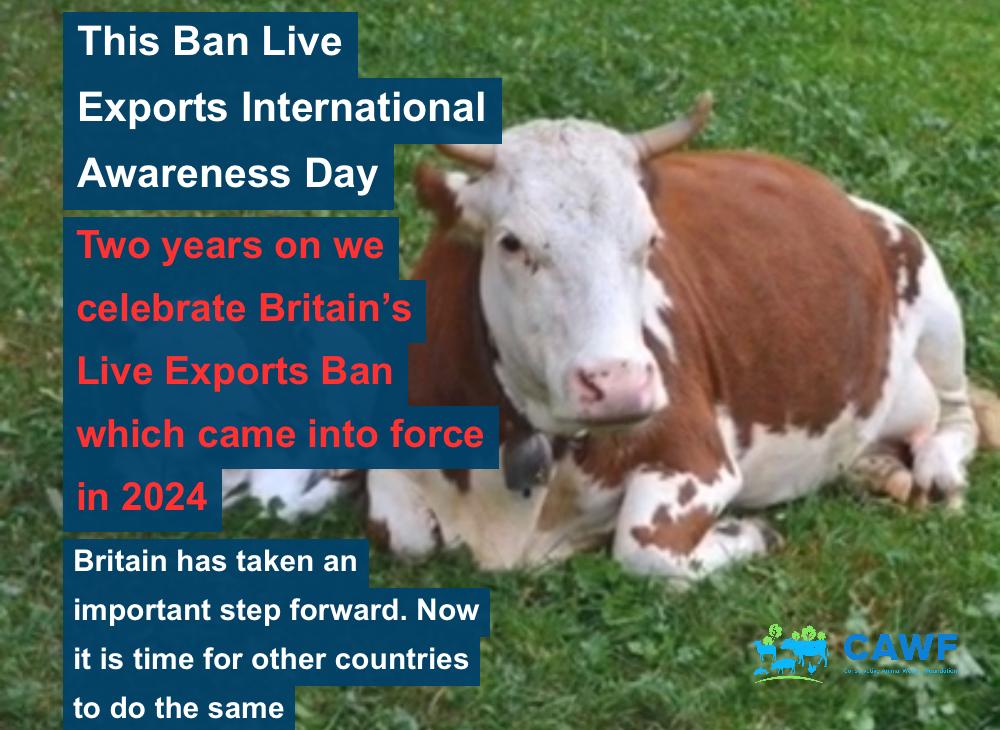
This Ban Live Exports International Awareness Day, we celebrate a landmark achievement for animal welfare: the Conservative Government’s ban on live exports for slaughter and fattening, which came into force on 22 July 2024.
Soon to mark its second anniversary on the 22nd July, the Animal Welfare (Livestock Exports) Act 2024 stands as one of the most significant animal welfare reforms in recent decades. The legislation prohibits the export of cattle, sheep, pigs, goats and horses from Great Britain for slaughter and fattening, ending a trade that subjected countless animals to long and often stressful journeys overseas.
For years, animal welfare campaigners raised concerns about the suffering animals can experience during transport, including overcrowding, extreme temperatures, exhaustion, dehydration and inadequate rest periods. The ban reflects the growing public expectation that animals should be afforded greater protection throughout their lives.
Britain has shown that meaningful change is possible when animal welfare is placed at the heart of policymaking. The legislation has been widely welcomed by welfare organisations and demonstrates international leadership on an issue that has concerned the public for decades.
However, while we celebrate this important milestone, the live export trade continues elsewhere. Just across the Irish Sea, Ireland remains a significant exporter of very young calves to continental Europe. Thousands of unweaned calves are transported each year, often undertaking lengthy journeys involving road and sea travel before reaching their final destinations. Animal welfare groups have repeatedly raised concerns about the challenges faced by such young animals during these long-distance transports, particularly regarding feeding, rest and stress.
The contrast highlights that there is still more work to be done internationally. We hope that other countries, including our close neighbour Ireland, will follow Britain’s example and review their own live export practices with a view to introducing stronger protections for farm animals.
As we mark the second anniversary of the ban, we should recognise the progress that has been made while continuing to advocate for higher welfare standards across Europe and beyond. No animal should endure unnecessary suffering as part of the food production system.
Britain has taken an important step forward. Now it is time for others to do the same.