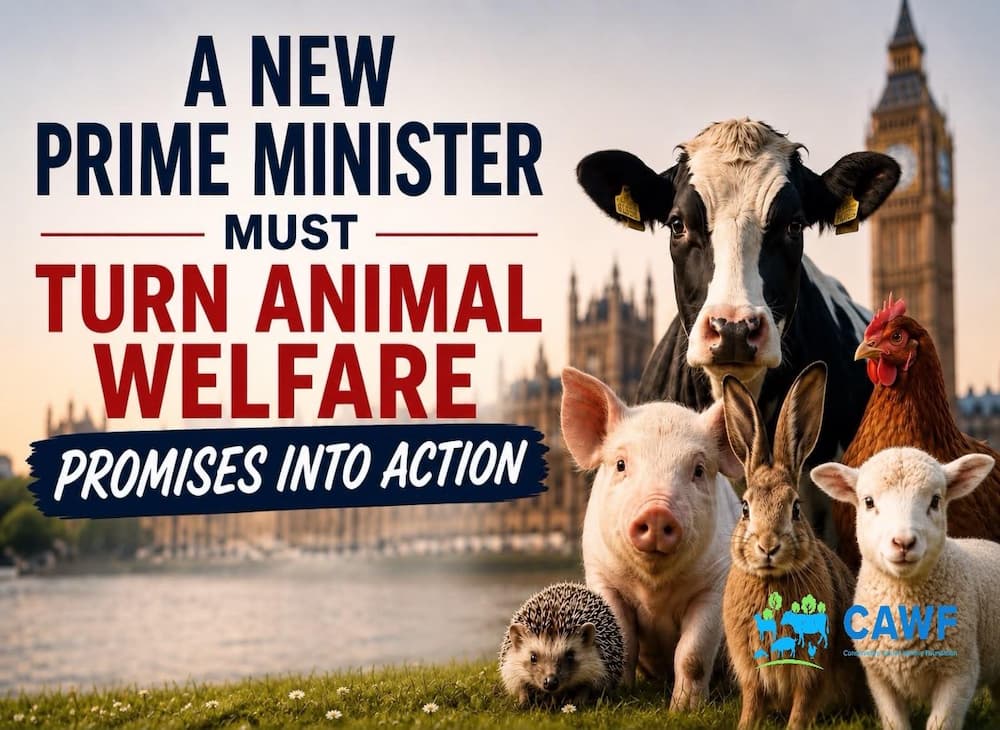
The arrival of a new Prime Minister provides an opportunity to reset the Government’s approach to animal welfare. It must also be a moment for honesty. During the last wo years in office, Labour failed to introduce a single Government Bill to advance animal welfare, leaving manifesto commitments undelivered and animals waiting for the action they were promised.
The government promised the biggest animal welfare reforms in a generation. Instead, animal welfare has repeatedly been pushed down the list of priorities. Promises have been delayed, commitments have been abandoned, and legislation has failed to materialise.
From weakening statutory legislation for tens of millions of farmed animals through the reversal of the ban on handling chickens by their legs, to the omission of the manifesto commitment to ban trophy hunting imports in the Animal Welfare Strategy, to the disappearance of promised action on foie gras imports, the government’s record has been characterised by inaction and delay rather than progress.
The absence of a clear commitment to mandatory animal welfare labelling is concerning. British consumers deserve to know how the food they buy has been produced – whether meat was imported from systems that would be illegal in Britain. British farmers who invest in higher welfare standards deserve to be recognised and rewarded. Yet the government has failed to bring forward the legislation necessary to deliver this transparency. Consumers have a right to know how their food was produced.
The Government’s broader record on wildlife is similarly troubling. While badger culling has now ended, it continued for two years under Labour. At the same time, environmental and wildlife protections have increasingly been treated as obstacles to development rather than safeguards for Britain’s natural heritage. In a major speech on economic growth, Chancellor Rachel Reeves argued that developers will no longer have to worry about bats and newts during the government’s proposed planning reforms to streamline planning and reduce wildlife related delays to infrastructure projects. Habitat loss, development pressures and environmental degradation are driving declines in species that were once common throughout the countryside. A close season for hares is long overdue and was included in the Government’s Animal Welfare Strategy but there is no sign of any legislation to protect these vulnerable species.
The Animals (Low-Welfare Activities Abroad) Act was introduced almost 3 years ago to stop UK businesses from promoting and selling tickets to overseas animal attractions that would fail to meet Britain’s animal welfare standards. The Government has yet to complete the final measures required to bring the legislation fully into force, meaning businesses can continue to market and profit from low-welfare animal attractions abroad. For a law intended to tackle animal cruelty and protect vulnerable animals, the delay is both disappointing and difficult to justify.
For an administration that promised so much, the lack of tangible progress is striking. Time and again, the government has chosen delay over delivery and inaction instead of meaningful legislation.
The new Prime Minister now faces a clear choice. They can continue with the drift and indecision that has defined the government’s approach to animal welfare so far, or they can recognise that public patience is wearing thin and that animals cannot afford to wait any longer. The Conservative Animal Welfare Foundation believes that Britain should be leading the world on animal welfare, not falling behind. That requires more than warm words and headline announcements. It requires a legislative programme that delivers meaningful improvements for farm animals, domestic animals and wildlife.
If the new Prime Minister is serious about restoring trust and demonstrating leadership, welfare legislation must follow commitments. The Government should set out a clear timetable for proposals in the Animal Welfare Strategy and honour the commitments that have already been made to the British public.
Animals have waited long enough. The new Prime Minister now has an opportunity to turn commitments into action and deliver meaningful progress for animals which has so far been missing.