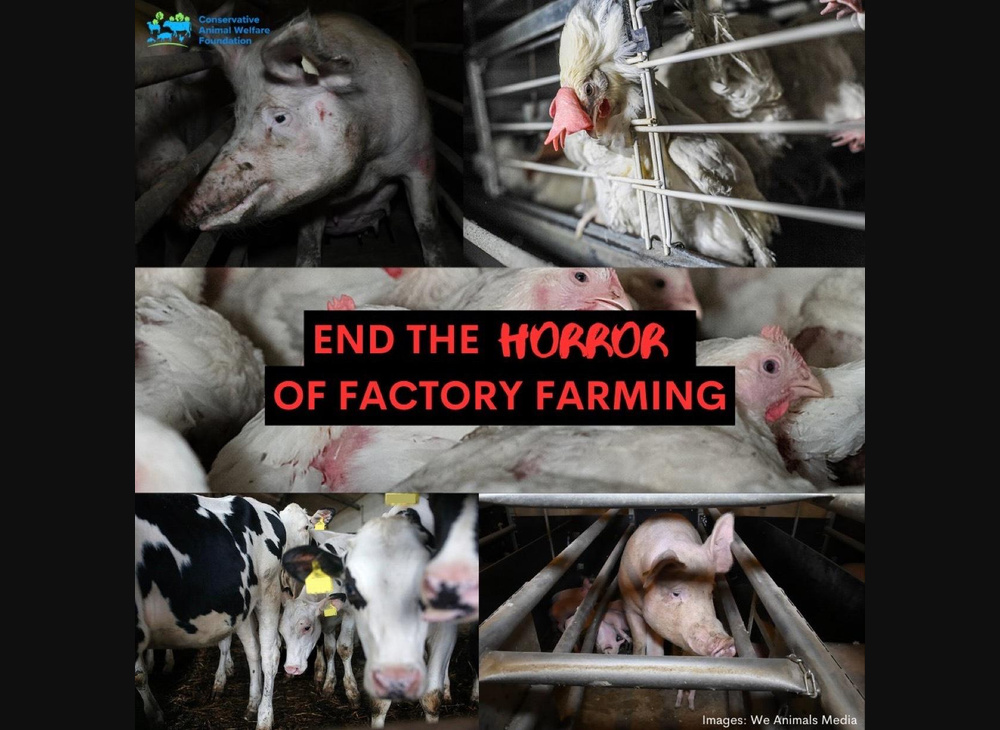
In the spirit of Halloween, our minds are filled with spooky tales and haunting images, yet for billions of animals, the make-believe horror associated with Halloween is not confined to one night. It’s a daily existence on factory farms, where grim conditions blur the line between nightmare and reality.
Imagine the claustrophobia of a small, dimly lit space where you can barely turn around, and the haunting presence of distress all around you. This is the world of billions of pigs and chickens on factory farms. They suffer a harsh cycle of confinement, and frequently suffer mutilations, and neglect. With barely enough space to move, laying hens are kept in cages so restrictive they can’t even flap their wings. Pigs endure cramped metal farrowing crates with no room to turn around or lie down comfortably.
In factory farms, animals are often deprived of even the most basic care and needs. Animals suffer from physical ailments, immense stress and a lack of mental stimulation, while others may be mutilated as part of routine painful practices like tail docking or beak trimming, all without pain relief. Unlike Halloween costumes and make-up, these mutilations and painful practices are all too real.
For ‘Frankenchickens’, horror is an everyday reality that does not end when Halloween is over. Bred to grow so quickly that their bodies can struggle to cope, these birds face painful lameness, heart problems and difficulty standing or walking. Some reach slaughter weight at just five weeks old, their short lives overshadowed by avoidable suffering. Behind the frightening name are living, feeling animals. Moving to slower-growing breeds and better living conditions must be a year-round priority.
Moreover, factory farms are eerily devoid of any natural experiences—sunshine, fresh air, and grass are replaced by artificial lighting, crowded spaces, and concrete floors. For animals, the monotony of confinement and lack of environmental enrichment induces stress, aggression, and depression. The relentless schedule of factory farming pushes animals to their physical limits, reducing them to mere production units rather than the sentient beings that they are legally recognised as, in the UK.
As Halloween passes and we shed our costumes, perhaps we can also help lift the “mask” that hides the reality of factory farming from public view. No animal should have to live in a horror story every day. The true horror is knowing that the nightmare for these animals continues long after the Halloween decorations are put away. We must end factory farming.